














WITH RENT ESCALATORS, THE REVENUE AT RISK FOR TOWERCOS COULD EXCEED $9 BILLION OVER THE LIFE OF THEIR LEASE AGREEMENTS IF THE COURT AGREES WITH DISH. AMERICAN TOWER LAST YEAR RECEIVED APPROXIMATELY $210 MILLION IN INCOME FROM DISH WIRELESS.
American Tower has taken DISH Wireless to federal court, warning that the company’s recent multibillion-dollar spectrum selloff does not excuse its continued obligation to pay rent on thousands of cell towers across the United States—and that the financial fallout for the tower industry could be immense.
In a declaratory judgment complaint filed in the U.S. District Court for the District of Colorado, American Towers LLC, SpectraSite Communications LLC, and InSite Wireless Group LLC accuse DISH of “contrived efforts to evade its clear and undisputed contractual obligations,” despite ongoing network operations that continue to rely on tower real estate.

DISH’s push to “86” 25,000 rent payments on towers may wash away the foundation of infrastructure it once touted as essential to becoming the nation’s fourth carrier.
The filing comes after EchoStar, DISH’s parent, entered into $40 billion in transactions to sell 5G-critical spectrum licenses to AT&T and SpaceX—sales that DISH claims were compelled by FCC scrutiny and that now allegedly “destroy the value” of its lease commitments.
American Tower Argues the Opposite
“DISH wants to keep the collocation agreement in place as to certain tower facilities, but not others,” the complaint states. “There is no factual, contractual, or legal basis for this charade,” American Tower states.
$40B Spectrum Deal Sparks Contract Showdown
In late summer, EchoStar announced two sales: roughly $23 billion in mid-band 3.45 GHz and 600 MHz licenses to AT&T, and approximately $17 billion in AWS-4 and H-Block spectrum to SpaceX. Both transactions are expected to close in 2026.
Within weeks, DISH sent a September 24 notice to American Tower claiming that the FCC’s review of underutilized spectrum had forced EchoStar into the sales, making their Strategic Collocation Agreement “frustrated in purpose” and excusing future rent payments.
American Tower Calls that Narrative Fiction
The complaint cites multiple public statements from EchoStar leadership—describing the company as “cash-rich,” and positioned to make its Boost brand “way more competitive” as a hybrid MVNO—as evidence that DISH is choosing not to pay, not unable to.
The tower company also notes that EchoStar admitted it likely would have won any FCC litigation over spectrum performance, undermining the idea that it was forced into the sales.
American Tower acknowledged the legal dispute directly during its third-quarter earnings call yesterday, confirming that it has taken court action to enforce the terms of its master lease agreement with DISH.
Chief Executive Officer Steven Vondran told analysts, “We did receive a letter from Dish saying that they believe they’re excused from making payments under the MLA based on the spectrum sale.” He emphasized that the contract runs through 2036 and accounts for roughly 4% of the company’s U.S. and Canada property revenue. The company’s stock fell almost 4% yesterday.
According to company filings, $5.25 billion in income was reported from the two countries, resulting in DISH being paid more than $210 million for its use of American Tower’s sites.
Market rumors aside, DISH’s recent spectrum sale agreements are pending, not finalized, and the FCC has imposed no constraints on the company’s ability to continue operating or deploying service under its tower leases. This is a material distinction: the FCC did not force divestitures — the transaction reflects EchoStar’s strategic decision, not a regulatory enforcement measure.
The Stakes for Towercos: Up to Half a Billion Dollars or More Annually
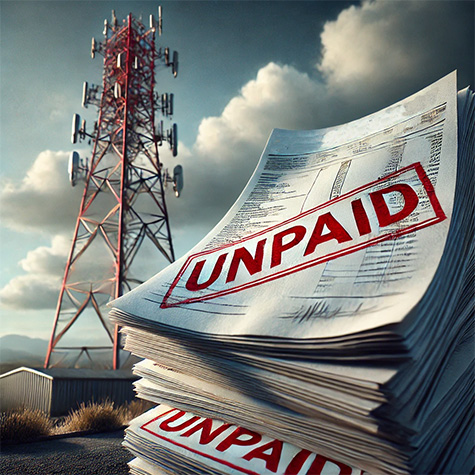
DISH’s AGGRESSIVE push for unpaid infrastructure fees—despite shaky legal footing—seems designed to pressure towercos into settlements, stall collections, or reframe liabilities ahead of key FCC/DOJ approvals. One card DISH may be playing is public tower companies’ sensitivity to stock valuations; even with strong earnings, American Tower’s stock dropped about 4% yesterday following the announcement of the lawsuit during their analysts’ call. Still, the move risks alienating key tower partners, signaling a permanent rupture, and could trigger regulatory scrutiny at a pivotal time.
DISH’s network has grown substantially since its initial deployment. EchoStar reported in May 2025 that the company had over 24,000 5G sites on air nationwide, ahead of the June 14, 2025, FCC deadline. According to build estimates, the count is now over 25,000.
Consultant Ken Schmidt, Steel In The Air President and CEO, estimates that DISH Wireless pays public tower companies an average of $16,800 per year in rent or leases. Collectively, that means that DISH’s 25,000 active locations translate into at least $425 million a year in lost revenue.
Schmidt said that, additionally, 5-10% of DISH’s sites are with individuals or small tower companies who were unwilling to accept the low pricing.
In a blog post yesterday, Steel in the Air said it had also obtained a letter from DISH to a rooftop landlord’s attorney, claiming that its lease obligations were “excused” due to alleged unforeseeable actions by the FCC.
In the early days of the DISH buildout, Tillman Infrastructure, Vertical Bridge, and other towercos said they had an agreement with the carrier to collocate on their structures; however, they, as well as other vertical realtors, have not released the number of sites with DISH as a tenant.
According to court documents, Crown Castle has approximately 4,000 DISH sites. The company sued DISH for additional rent after its equipment cabinet extended 20 inches beyond its leased area. However, the tower count could be considerably higher, as other DISH sites on Crown Castle structures may not have been affected by the litigation.
The filed American Tower complaint does not specify how many towers DISH leases from the company. However, based on Schmidt’s average yearly estimate per site of $16,800 in rental income and American Tower’s DISH income of $210 million in 2024, it could be inferred that DISH is on approximately 12,500 of their structures.
With most lease agreements being at least 15 years, with Crown Castle’s set at 30 years with rent escalators, the revenue at risk could exceed $9 billion.
Much of that revenue growth was expected to offset the financial shock tower companies experienced when T-Mobile decommissioned 35,000 Sprint sites.
If the courts let DISH walk away, that relief disappears—and revenue falls again. It is possible the court might rule in American Tower’s favor, but the issue is whether EchoStar has properly insulated DISH Wireless, and they are essentially judgment-proof.
“Tower valuations depend on long-term, stable lease contracts,” one infrastructure analyst told Wireless Estimator. “If DISH can shed obligations, it fundamentally reintroduces carrier default risk.”
Revenue at Risk Goes Beyond the 25K Active Sites
Beyond the roughly 25,000 tower locations where DISH currently generates recurring rent payments for towercos, there is additional financial exposure tied to sites DISH has committed to but never fully deployed.
Under long-term master lease agreements, towercos structured pricing and future tenancy expectations around DISH’S promised national buildout, including minimum payment provisions and escalators that ramped as more equipment was installed.
By halting expansion and attempting to walk away from both active and reserved tower space, DISH is not only jeopardizing billions in contracted revenue tied to on-air infrastructure, but also erasing the future leasing growth those contracts were expected to produce — compounding the hit to tower company earnings far beyond the removal of existing colocations alone.
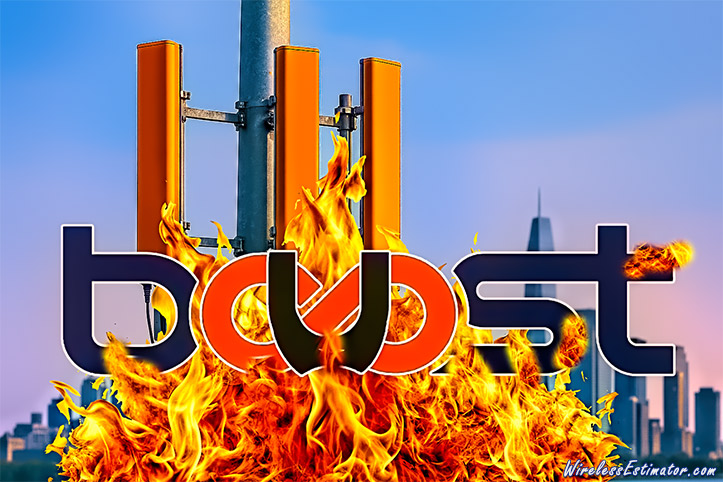
A Battle Over the Future of Boost Mobile
In the complaint, American Tower emphasizes that DISH still operates the Boost Mobile network on towers across the country—relying on the very infrastructure it now seeks to abandon.
American Tower claims DISH is attempting to continue occupying specific sites while selectively disavowing others, an approach the tower giant calls legally untenable.
The filing warns that if EchoStar attempts to shift revenue out of DISH Wireless to render it judgment-proof: “…American Tower will hold DISH, EchoStar, and all of their affiliated entities accountable for all damages that it incurs.”
A second phase of litigation seeking damages may follow if the court agrees that DISH remains bound by the contract.
Industry-Wide Legal Aftershocks Expected
American Tower may not be alone. DISH holds similar leasing agreements with Crown Castle, SBA Communications, and numerous regional tower operators.
If DISH notified them of the same position, multiple lawsuits are likely to follow—each protecting billions in long-term rental income.
What makes this case uniquely urgent: unlike during the Sprint network shutdown, there is no other nationwide carrier stepping in to reuse that infrastructure.
Tens of Thousands of Tower Slots Could Sit Empty
“It would be the first time in U.S. wireless history that a facilities-based carrier built a network and then tried to reverse-engineer itself into an MVNO,” another analyst observed. “The tower industry has never priced that outcome.”
DISH has not yet filed its response to the complaint. The court will first determine whether the Strategic Collocation Agreement remains in force and whether DISH is obligated to continue payments.
If American Tower prevails, DISH could owe full rent across all sites through the life of the contracts—despite selling spectrum and downsizing its network organization.
If DISH prevails, billions in expected rental revenues vanish—and the tower business model may need a historic reset.
Either way, one fact is now apparent: The tower-reliant future that was supposed to follow Sprint’s sunset suddenly appears less stable—and American Tower has signaled it is ready for a long fight to keep those payments flowing.
Editor’s Note: For over 21 years, Wireless Estimator, without pay walls, has gone beyond surface-level press releases and generic media reports. To stay informed with exclusive news, industry updates, and in-depth investigative articles you won’t find anywhere else, subscribe to our news releases on our home page today. And if you’re a supplier, service provider, or contractor, you’ll need to be listed at no charge in the industry’s most successful buyer’s guide, the BLUE BOOK, with almost 1.3 million ad views and the only industry platform offering Quick Connect to ensure your company’s success. Other time-honored successful advertising opportunities are available here.

