
















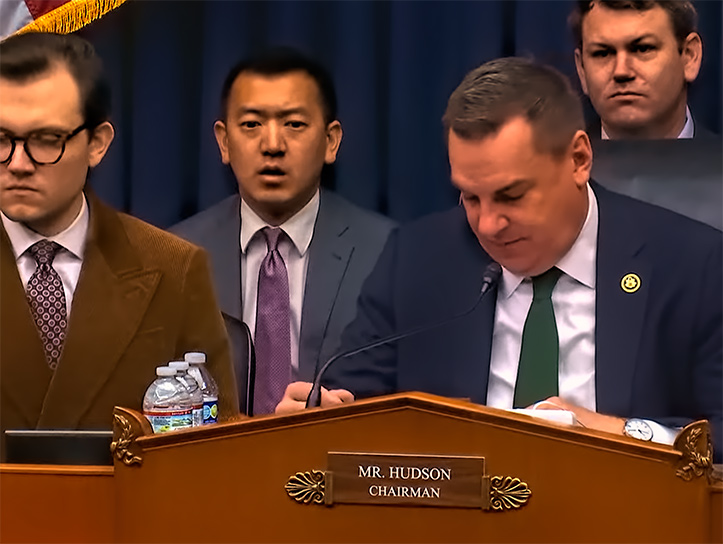
Subcommittee Chairman Richard Hudson emphasized the need to provide certainty regarding FirstNet. The hearing video is available here.
The House Communications and Technology Subcommittee this week examined the future of the First Responder Network Authority (FirstNet) as its statutory authorization approaches a 2027 sunset, mirroring recent Senate scrutiny of the nationwide public-safety broadband system. Lawmakers framed the hearing as both an oversight review and an opportunity to refine governance, accountability, and long-term investment before reauthorization moves forward.
Subcommittee Chairman Richard Hudson emphasized the need to provide certainty for first responders who depend on FirstNet’s priority communications. At the same time, Ranking Member Frank Pallone Jr. underscored bipartisan support for extending and strengthening the network. Much of the discussion centered on clarifying the relationship between FirstNet and the National Telecommunications and Information Administration (NTIA), with witnesses urging clearer lines of authority to improve performance oversight and transparency.
Public-safety leadership and industry representatives defended FirstNet’s operational record while acknowledging governance questions raised in federal audits. Scott Agnew, president of FirstNet at AT&T, described the network as mission-critical infrastructure that has materially improved interoperability and emergency communications nationwide, adding that continued stakeholder review and congressional visibility into the AT&T contract would support accountability.
Lawmakers broadly agreed that reauthorization should do more than extend FirstNet’s mandate. Proposals under discussion would modernize oversight, address audit findings related to performance measurement and reinvestment, and ensure the network keeps pace with evolving technologies and responder needs—while avoiding governance changes that could limit operational flexibility.
With parallel activity underway in the Senate, momentum is building toward reauthorization. The central debate now focuses less on whether FirstNet will be renewed and more on how Congress reshapes its governance and oversight to ensure the public-safety network remains effective for the next decade.
