















Days after he tried to blow up a communications tower in Pascagoula, MS, investigators remain no closer to determining what drove a 59-year-old North Carolina man to target critical emergency infrastructure in a brazen, daylight attack that ended in a fatal shootout with deputies.
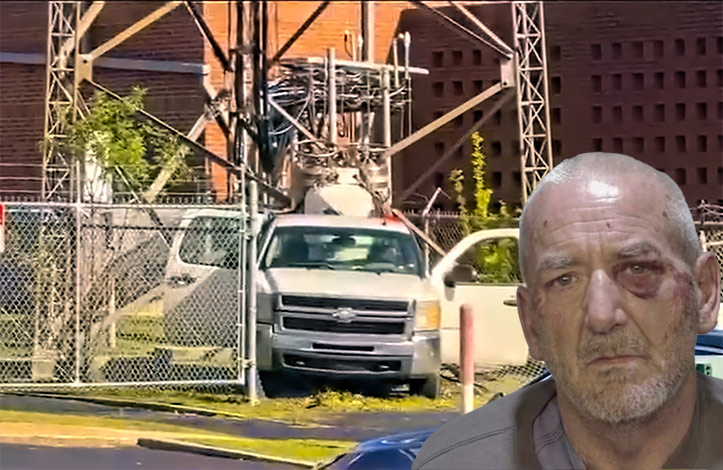
Authorities say David Ray Wyrick of Eden, N.C., drove a truck through a secured fence behind the Jackson County Emergency Operations Center on April 16, positioning the vehicle near a communications tower that supports 911 dispatch and public safety radio systems. According to investigators, the truck was loaded with propane and other tanks, and Wyrick opened valves in an apparent attempt to release gas and ignite an explosion at the site.
A witness alerted authorities before the plan could be carried out. When deputies arrived, Wyrick fled briefly and then confronted law enforcement with a handgun. Deputies returned fire after commands to drop the weapon were ignored, striking and killing him at the scene. No officers or civilians were seriously injured, but the outcome could have been far different had the ignition attempt succeeded.
“Jackson County deputies, criminal investigators, as well as members of the Jackson County Metro Enforcement Team responded to that location and were engaged in gunfire by Wyrick. Those same deputies and officers returned fire, and after a brief gun battle, Wyrick was hit multiple times and died at the scene,” Jackson County Sheriff John Ledbetter said in a statement. “The tanks on the truck were ablaze for a brief period but were quickly secured by Jackson County Fire personnel.”
Authorities have not publicly identified Wyrick’s occupation, and despite extensive reporting on his criminal history across multiple states, no employment background has emerged.
This was not a case of copper theft or opportunistic vandalism. It was a deliberate attempt to disable a node tied directly to emergency response. A successful detonation could have disrupted dispatch communications across multiple agencies, potentially impacting police, fire, and EMS coordination in the region.
What remains missing is motive. Investigators have not identified any ideological ties, manifesto, or connection to known anti-telecom or anti-5G movements. Federal agencies, including the FBI and ATF, have joined the investigation, underscoring the seriousness of an attempted attack involving improvised explosive materials near critical infrastructure.
Records show Wyrick has a history of violent encounters with law enforcement, including a prior involuntary manslaughter conviction in North Carolina and a 2025 arrest in Florida in which he allegedly assaulted a sheriff’s sergeant with a metal pipe and attempted to grab deputies’ firearms. He was also wanted on a probation violation at the time of the Pascagoula incident.
For an industry used to chasing copper thieves, cleaning up vandalism, and rebuilding after storms, the Pascagoula incident stands apart. While there have been isolated cases of anti-5G extremists targeting towers, this marks a far more serious escalation—an apparent attempt to use a vehicle and fuel source to trigger an explosion at a public safety communications site.
And seven days later, the most critical piece of the puzzle remains unresolved.

