










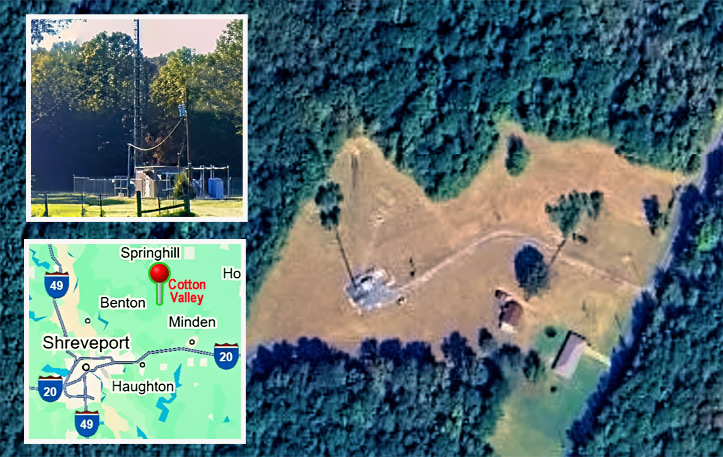
Following an OSHA investigation regarding a fatality that occurred in Cotton Valley, Louisiana, on February 17, 2025, the agency charged RB Telecom Services, LLC, with a serious violation, fining the company $4,965, which was later settled for $4,500. OSHA’s maximum fine for a serious violation is $16,131.
The Occupational Safety and Health Administration (OSHA) has issued a “serious” violation and settlement fine of $4,500 to RB Telecom Services, LLC, following the fatal fall of a tower technician working on a T-Mobile build at an American Tower site in Cotton Valley, Louisiana. The incident occurred on February 17, 2025, when a 27-year-old Texas tower technician fell from a platform of a guyed communications tower during equipment installation.
The tower, approximately 349 feet tall, was being used for a scheduled upgrade project. According to OSHA’s findings, employees were performing installation activities on an elevated platform “over 4 feet high without the employer ensuring personal fall arresting systems were used,” a violation of 29 CFR 1910.268(g)(1) — the telecommunications standard requiring fall protection for any work performed above four feet on poles and towers.
OSHA did not state whether the worker was wearing fall-protection gear and tied off at the time of the accident. However, the citation’s language — specifically that the employer “did not ensure” fall-arrest systems were used — indicates the employee was not tied off while performing the work on the upper platform, but was wearing appropriate PPE.
What OSHA Classifies as a “Serious Violation”
Under the Occupational Safety and Health Act, a serious violation exists when a workplace hazard is likely to result in death or serious physical harm, and the employer either knew or should have known of the hazard but failed to correct it. In tower-climbing operations, failure to ensure personal fall-arrest systems are properly used at height directly meets this threshold, as falls remain the leading cause of fatalities in the communications-tower sector.
A Persistent Challenge for Safety-Focused Tower Firms
This type of citation continues to frustrate many reputable tower-service companies. Even when employers provide proper PPE, training, and written procedures, a single lapse by a technician can still leave the company liable. Industry leaders note that while 100% tie-off is required at all times, it is practically impossible for supervisors to monitor every climber at every moment during tower work — yet OSHA enforcement ultimately places responsibility on the employer.
The fatality underscores the ongoing challenge in ensuring absolute adherence to fall-protection procedures in an environment where a single misstep can have catastrophic consequences.
How OSHA Reaches an Informal Settlement
OSHA first issues a proposed penalty, but employers may request an informal settlement conference to present additional information, show corrective actions, or demonstrate good-faith safety efforts. During these meetings, OSHA often agrees to reduce the fine—while keeping the violation on record—if the employer can show it has addressed the hazard and improved procedures.
In this case, the serious violation remained in place. Still, the penalty was lowered from $4,965 to $4,500, which is typical of OSHA’s practice of adjusting fines based on cooperation, company size, and corrective measures taken after the incident.
OSHA has six months from the date of a fatal incident to issue any citations.