















The D.C. Circuit upheld $92 million in FCC fines against T-Mobile/Sprint, saying the carriers leaned on an honor system of contracts instead of verifying third-party access to customers’ location data. They couldn’t demand a jury because they paid and sought direct review rather than refusing to pay and forcing an enforcement case that would have given them a jury trial.
A three-judge panel of the U.S. Court of Appeals for the D.C. Circuit upheld $92 million in Federal Communications Commission forfeitures against T-Mobile and Sprint for failing to safeguard customer location data. Writing for a unanimous court, Judge Florence Y. Pan, joined by Judges Karen LeCraft Henderson and Brad Garcia, rejected the carriers’ bid to vacate penalties tied to 2018–2019 abuses in location-based services.
Addressing the carriers’ Seventh Amendment argument, the panel said it did not need to decide whether a jury trial was constitutionally required because the Communications Act gave the companies a path to a jury: they could have declined to pay and awaited an enforcement action for a de novo jury trial under 47 U.S.C. § 504(a). By paying and seeking immediate appellate review instead, they waived any jury right. The court also noted that an unpaid forfeiture order carries no collateral legal consequences unless and until a court orders payment.
On the merits, the court agreed with the FCC that customer location information qualifies as customer proprietary network information and that carriers must take reasonable measures to prevent unauthorized access. The opinion recounts how third-party aggregators and resellers—including entities identified in public reports such as Securus and Microbilt—obtained or resold location data, and it faults the carriers for effectively relying on an “honor system” of downstream contracts even after red flags emerged.
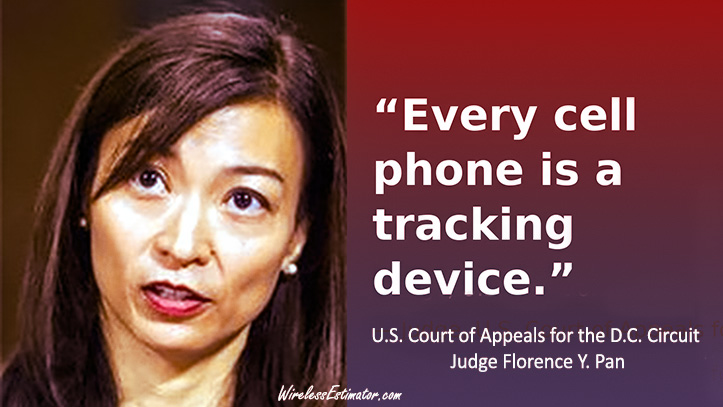
Judge Pan’s opinion opens with a plain-spoken explanation of why this data is sensitive: “Every cell phone is a tracking device.” She goes on to describe how phones must periodically connect to the nearest tower, sending carriers a record of the phone’s location and, by extension, the customer’s location—information that can accumulate into “an exhaustive history of a customer’s whereabouts.” That framing underscores why Congress imposed a duty to protect location data and why the FCC could require verification rather than trust alone.
The panel also upheld how the agency calculated the penalties. Treating each third-party relationship as a separate, continuing violation once the problems were known was reasonable, the court said, and the FCC properly weighed factors such as egregiousness and ability to pay in assessing $80.08 million against T-Mobile and $12.24 million against Sprint.
Friday’s decision conflicts with the Fifth Circuit, which in April vacated a $57 million FCC fine against AT&T after concluding the agency’s process ran afoul of the jury-trial right in light of the Supreme Court’s SEC v. Jarkesy. With two circuits now split on the path to enforcing FCC forfeitures in privacy cases, further appeals—and potentially Supreme Court review—are likely.

