









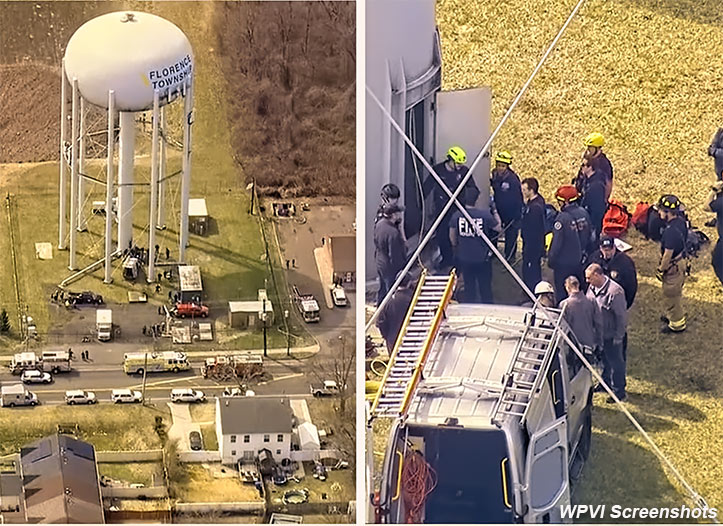
A 63-year-old tower technician is expected to be okay after suffering a medical emergency while working 80 to 100 feet above ground on a water tower-mounted cell site in Florence Township, NJ on Wednesday.
The worker, who was on site with a coworker, experienced chest pains while on the platform and called for help, according to officials. Authorities did not release the name of the worker or his employer.
Any report of chest pain should be treated as a medical emergency. In tower work, where technicians are operating at height under physically demanding conditions, even minor symptoms can quickly become critical events requiring specialized rescue.
Tight quarters, fast response
The Burlington County Technical Rescue Team was activated and executed a high-angle rescue using ropes and a metal-framed basket. Officials said the tower’s internal structure—including a center column and limited ladder access—made the operation more difficult.
Despite the constraints, crews completed the rescue in 51 minutes.
The worker was alert and talking during the operation and was transferred to an ambulance shortly before 2 p.m. for evaluation.
Officials credited the team’s training and technical capability for the successful outcome.
The hidden risk: heart health in a high-stress, high-altitude trade
While the cause of this incident has not been identified, the physically demanding nature of tower work continues to raise broader concerns about cardiovascular health in the workforce. Long hours, environmental exposure, and the cumulative effects of stress can contribute to heart-related conditions that may not always present warning signs until a critical moment.
To address those risks, NATE: The Communications Infrastructure Contractors Association has expanded its wellness resources, including its Thrive@Work series, which provides guidance on physical health, stress management, and early warning indicators. The latest edition is available here: View NATE Thrive@Work Physical Health Guide

