
















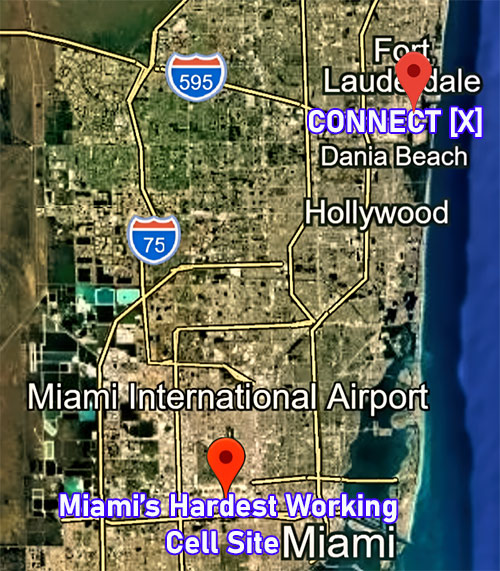
As the wireless industry prepares to gather for WIA ConnectX—opening on Monday in Fort Lauderdale—new research is putting a spotlight on 30 miles south in Miami, where network demand is already testing the limits of existing infrastructure.
A new analysis by Mike Dano, lead industry analyst at Ookla, drills down to a level rarely seen in public reporting: identifying the single cell site in Miami carrying the heaviest traffic load.
Drawing on Speedtest Intelligence and consumer quality-of-experience data, the report underscores a familiar theme for tower owners and infrastructure providers—demand isn’t just growing, it’s becoming increasingly concentrated and dynamic.
According to the analysis, aggregate mobile speeds across Miami have climbed more than 26% in recent years, reaching nearly 188 Mbps in 2026. But those averages mask sharp fluctuations. On a typical weekday, speeds can swing dramatically—from early morning highs approaching 300 Mbps to evening slowdowns closer to 158 Mbps as network demand peaks.
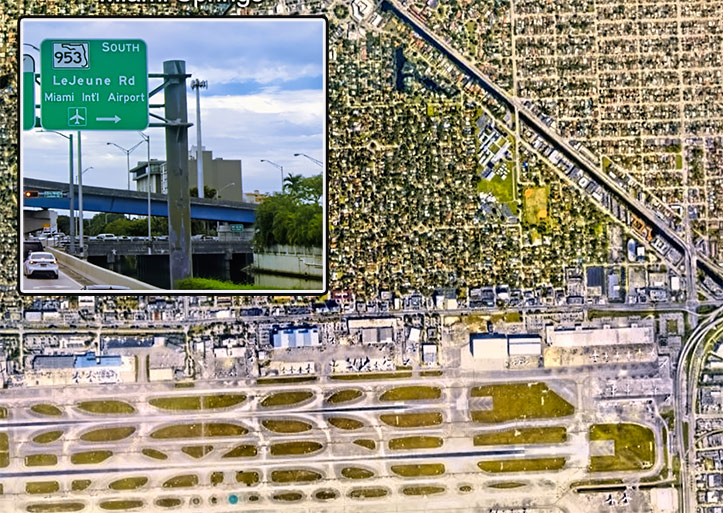
More telling is where that pressure is landing. Among roughly 3,000 sites analyzed, the most heavily strained location sits just north of Miami International Airport—an area where dense population, travel demand, and data consumption converge.
For attendees heading to Connect [X] in Fort Lauderdale—part of the broader Miami–Fort Lauderdale–West Palm Beach metropolitan area—the findings offer a real-time case study in how network performance is evolving at the site level, and where future infrastructure investment may be headed.

