













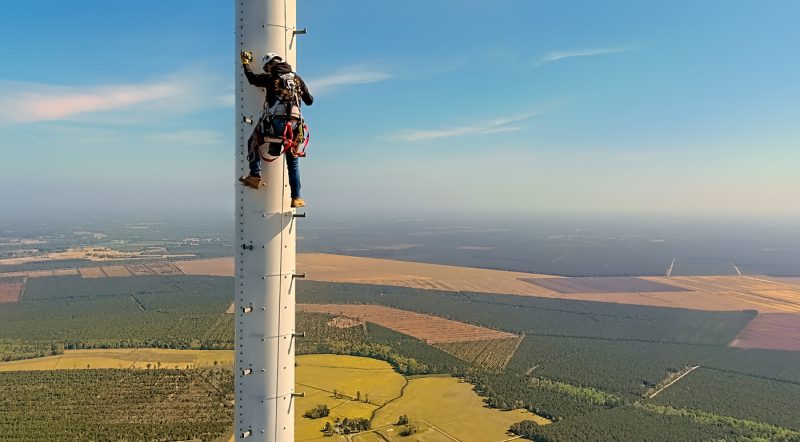
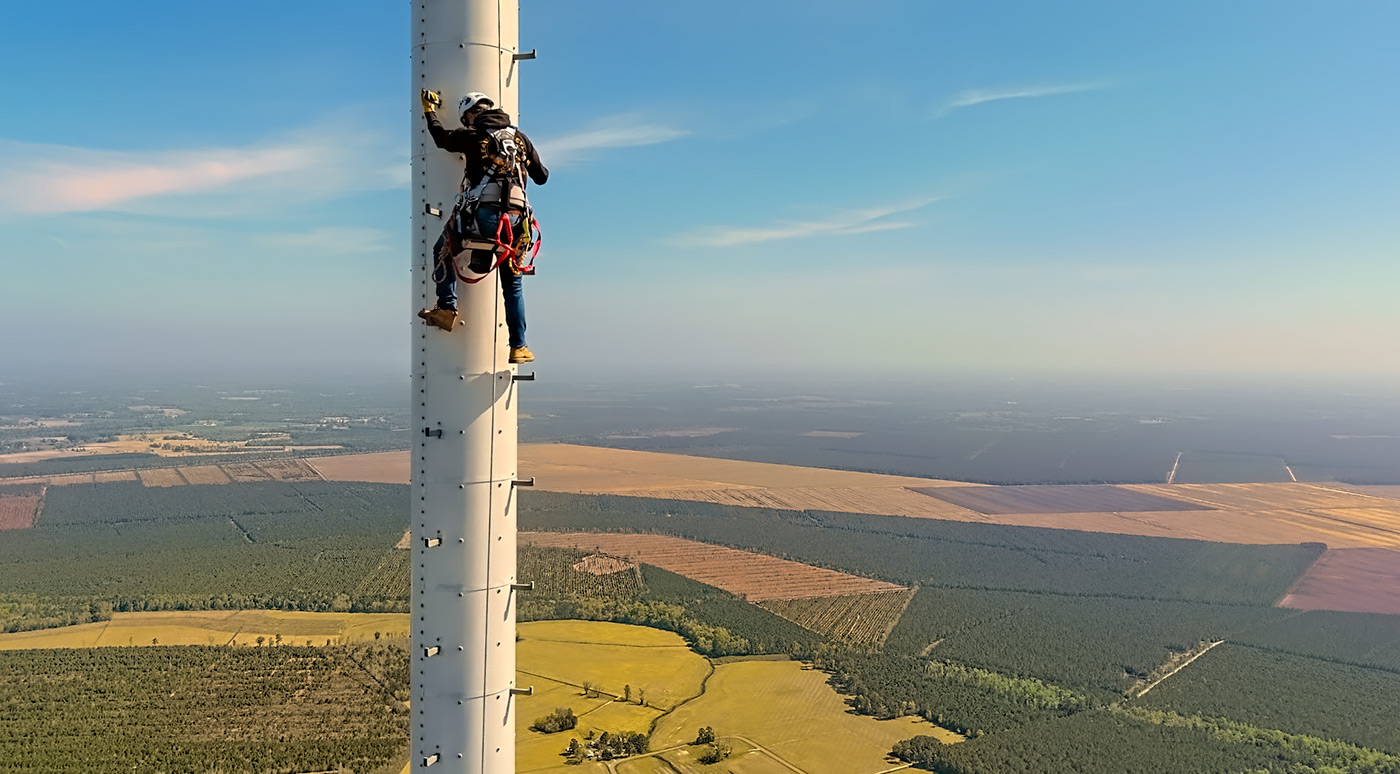
FCC Chairman Brendan Carr went 2,000 feet above ground on April 9, 2026, ascending one of the tallest broadcast towers in the United States in New Bern, North Carolina—an effort aimed at highlighting the work of America’s telecommunications workforce.
The climb took place on the 1,999-foot WCTI/WYDO tower, owned by Sinclair Broadcasting and serving WCTI-TV and co-located WYDO. A crew from Broadcast Construction Solutions (BCS), led by Jeremey Hulse and Patrick Moore, is currently performing a full guy-wire replacement on the structure—one of the more complex and high-risk maintenance scopes in the broadcast sector.
From Skip Pan to the Top Beacon
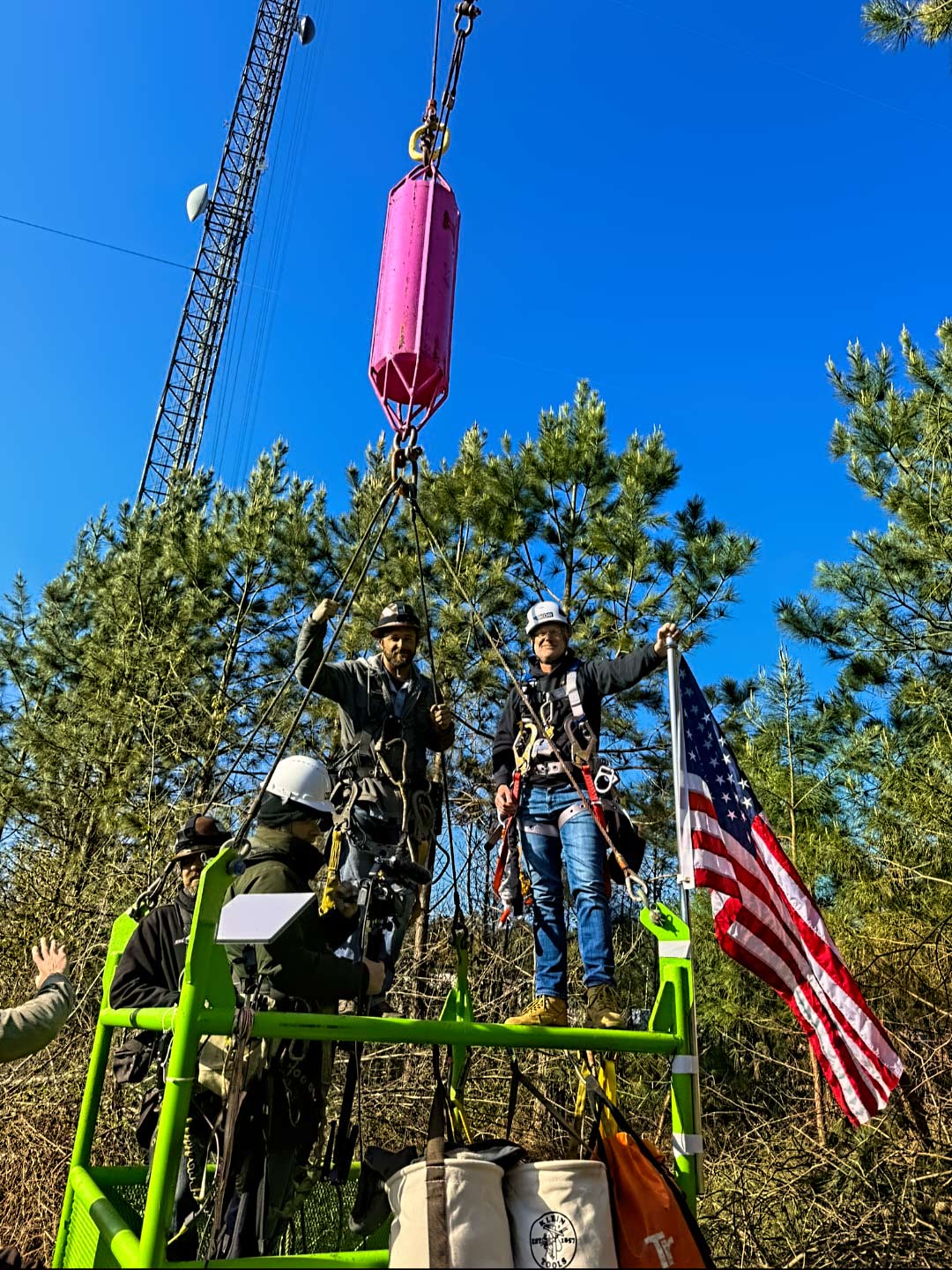
After arriving on site, Carr and a Fox News reporter were lifted partway up the tower using a personnel platform, or “skip pan,” where a live segment was filmed near the upper steel.
From there, Carr transitioned to a full climb with BCS crew members Hulse and Camden Cauldwell, ultimately ascending both stacked antennas and continuing to the tower’s highest point—the lightning arrestor and beacon, raising above 2,000 feet.
To safely accommodate the climb, Sinclair engineers temporarily transitioned operations to auxiliary antennas, allowing access to the primary broadcast systems.
“America’s Tower Crew Is the Best”
Speaking during the live interview at altitude, Carr underscored both the physical scale of the climb and the importance of the workforce behind it.
“We’re about 2,000 feet above the Earth right now,” Carr said. “It’s unbelievable… It’s like the Empire State Building with the Washington Monument stacked on top.”
Asked why he continues to climb, Carr pointed directly to the people doing the work.
“Most people think their phone or TV just works—they don’t think about it,” he said. “But it’s thanks to the hard work of crews like this. America’s tower crew is the best—the best.”
Carr added that the climb was part of a broader effort to highlight workforce opportunities.
“These are great jobs,” he said. “You can make $50,000, $100,000 once you’ve been doing it for a little while. We’ve got about 20,000 tower climbers out there, and we need more. It’s a great career.”
Industry Collaboration Made It Possible
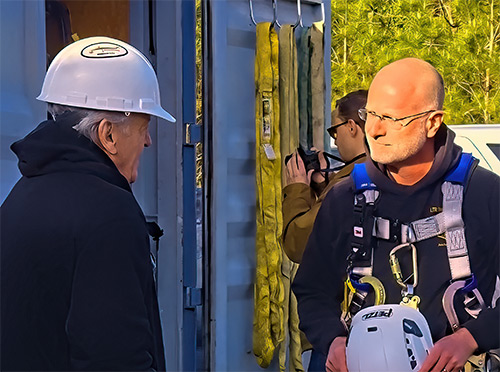
The climb required extensive coordination across the industry. Craig Snyder, Chairman of VIKOR, helped identify and organize the opportunity, while NATE: The Communications Infrastructure Contractors Association provided drone coverage and a licensed pilot for aerial footage. FCC logistics were coordinated through staff, including Policy Advisor Katie McAuliffe.
BCS leadership emphasized the teamwork required to make the event happen.
“Pat Moore and I give our heartfelt thanks and appreciation to everyone at Sinclair Broadcasting for allowing this to happen,” said Don Doty, Vice President of BCS.
Doty also highlighted the Chairman’s engagement with the field crew.
“The FCC Chairman could not have been more gracious to our tower crew,” Doty said. “It is government officials like Chairman Carr that renew my faith in our leaders in Washington, D.C.”
Moore added, “The WCTI general manager, chief engineer, and entire station staff could not have been better hosts.”
A Chairman Who Climbs—and Builds Influence
This marks at least Carr’s fifth known tall tower climb—and one of his most visible. Industry sources say the Chairman had specifically requested an opportunity to reach the top of a tall antenna months in advance, prompting outreach to several contractors before BCS confirmed availability during ongoing work.
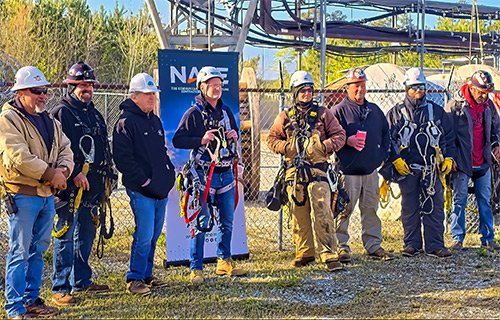
Carr’s approach to climbing dates back to 2018, when he first went up a tower with industry partners. Since then, he has continued to use these experiences to build credibility with the workforce and differentiate himself from other policymakers.
“The Chairman is fearless,” one organizer said. “He reminds me of enthusiastic young climbers—there’s a point he’s making, but not many would actually do what he does.”
Timing—and Visibility—Aligned
The climb drew additional attention following recent remarks by President Donald Trump, who referred to Carr as “probably the most powerful person in Washington” during a White House meeting with reporters.
With Fox News providing live coverage, NATE capturing drone footage, and ideal weather conditions, the climb quickly became one of Carr’s most visible public engagements.
“This was probably the most epic climb for Carr yet,” one organizer noted. “Everything came together perfectly.”
More Than a Photo Opportunity
Beyond the optics, the climb underscores Carr’s central role in shaping the communications infrastructure landscape. As FCC Chairman, he holds significant influence over policies affecting carriers, tower owners, and contractors—making his engagement with the field particularly notable.
That engagement has had tangible impacts, including facilitating discussions between contractors and major carriers on framework agreements and broader industry concerns.
A View from the Top
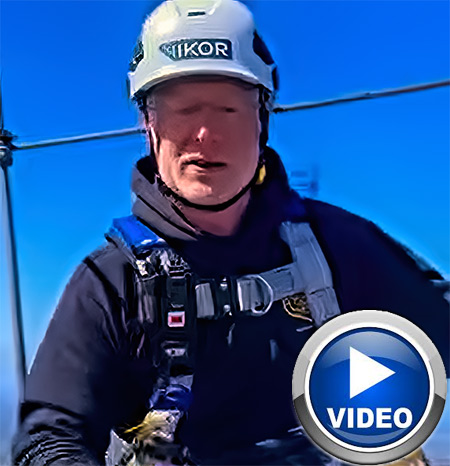
At 2,000 feet, the climb provided Carr with a firsthand look at the demands of tower work—from the physical endurance required to the precision needed to safely maintain critical infrastructure.
“We’re really in a new golden age of connectivity,” Carr said. “From fixed wireless to satellites to 5G and 6G, America’s going to lead the way.”
For an industry grappling with pricing pressures and evolving unfair carrier dynamics, Carr’s climb delivered a message that resonated well beyond the tower structure itself: policy is one thing, but perspective still matters.
And on April 9 in New Bern, that perspective came from 2,000 feet up.

