















A Delaware jury has awarded $18.2 million to the families of two brothers killed when an articulated boom lift toppled onto power lines at a Bethany Beach cell tower site in November 2020. The verdict against general contractor Nexius Solutions, Inc. and its internal training affiliate Myndco, Inc. came after nearly four years of litigation and a ten-day trial that methodically exposed a cascade of safety failures — uncertified workers, dangerous wind conditions that company policy prohibited, a remote safety manager instead of an on-site one, and a corporate structure that talked extensively about safety oversight while failing to exercise it when it mattered most.
But as the families of Jovan Maldonado-Andino and Bryan Maldonado-Andino absorb the jury’s verdict, a deeply troubling question shadows every dollar of the $18,228,409 award: with both Nexius and Myndco bankrupt, stripped of assets, and closed, and with the T-Mobile contract that governed this project requiring Nexius to carry a combined insurance maximum of just $6 million, who is actually going to pay — and how much?
The answer, based on court records, bankruptcy filings, and the T-Mobile Master Agreement that governed Nexius’s work, is that the family may recover a fraction of what twelve Delaware jurors said they deserved. The verdict is a moral and legal vindication for a family that fought for nearly four years to hold these companies accountable. Whether it translates into full financial accountability is a different question — one whose answer may ultimately be determined not by what happened on a windy Delaware beach on November 2, 2020, but by the fine print of insurance policies held by companies that no longer exist.
Two Brothers, 120 Feet in the Air, on a Day No One Should Have Been Working
Jovan Maldonado-Andino was 23 years old. His brother Bryan was 22. They had been hired by Velex, Inc. — the construction arm of the Nexius family of companies — on October 19, 2020. Less than two weeks later, they were dead.
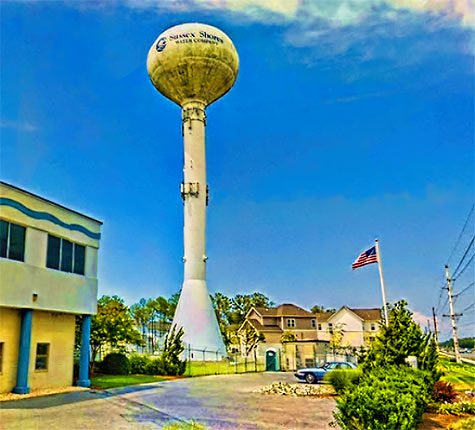
On the morning of November 2, 2020, the two men climbed into the platform of a Genie Z-135/70 articulating boom lift at the Sussex Water Company water tower in Bethany Beach, Delaware. They were working on a T-Mobile cell phone antenna approximately 120 feet above the ground. The National Weather Service had issued a wind advisory for the Delaware beaches the previous day, updated at 3:52 AM on November 2, warning of sustained winds of 25 to 35 mph with gusts up to 50 mph. The manufacturer of the Genie Z-135/70 specified a maximum wind threshold of 28 mph. Nexius had its own internal policy prohibiting aerial lift operations when winds exceeded 20 mph.
None of that stopped the work. Around 10:30 AM, with wind gusts clocking at 35 to 44 mph at the site, the lift tipped over. It tangled in nearby power lines as it fell. Both men were killed.
As the Wireless Estimator reported following the incident, the federal Occupational Safety and Health Administration investigated and, on April 30, 2021, cited Velex for three serious violations. Velex paid workers’ compensation for the deaths and was not named as a defendant in the civil lawsuit that followed. The brothers from Puerto Rico had been on the job for less than two weeks when they died, and they had never completed the aerial lift training that would have certified them to operate the equipment that killed them.
The Lawsuit and the Long Road to Trial
In October 2022, Vanessa Andino — the administratrix of both men’s estates and their mother — filed a wrongful death lawsuit in Delaware Superior Court. Also named as a plaintiff was Joaquin Maldonado, the father. The defendants were Nexius Solutions, the general contractor; Myndco, the training entity that provided incomplete onboarding to the brothers; and Sunbelt Rentals, which provided the lift to Velex. Genie Industries and Terex Corporation, the lift’s manufacturer, were named initially but dismissed with prejudice pursuant to a stipulation in November 2025. Sunbelt reached a confidential settlement with the family in March 2026, shortly before trial, and the case was dismissed.
The case was assigned to Delaware Superior Court Judge Francis J. Jones, Jr., who presided over nearly four years of litigation encompassing extensive discovery, motions to compel, multiple Daubert challenges to expert witnesses, cross-motions for summary judgment, motions in limine, and ultimately a ten-day jury trial beginning with jury selection on April 16, 2026. Trial dates ran from April 16 through April 24. The jury found in favor of the plaintiffs. Judge Jones entered the judgment order on April 27, 2026.
The plaintiffs were represented at trial by Michael Zettlemoyer and David Kwass of Saltz Mongeluzzi Bendesky, along with Delaware counsel Timothy Lengkeek of Young Conaway Stargatt & Taylor. Walter O’Brien and Krista Shevlin of Weber Gallagher represented Nexius. Marc Perry and R. Joseph Hrubiec of Post & Schell, P.C represented Myndco.
The T-Mobile Contract — and What It Required
The work that killed Jovan and Bryan Maldonado-Andino was being performed under a Master Agreement between Nexius Solutions and T-Mobile USA, Inc. Nexius had entered into its original agreement with T-Mobile in January 2019. The governing version at the time of the accident was subsequently superseded by Version 5.1 of the T-Mobile Main Agreement, revised June 21, 2022, which expressly terminated the prior agreement and governed all outstanding orders thereafter.
That contract is now available, and its insurance requirements are documented. Section 3.1 of the T-Mobile Main Agreement sets out the mandatory coverage Nexius was required to maintain in full force during the term of the agreement. The requirements are as follows: commercial general liability insurance of not less than $1,000,000 per occurrence with a $2,000,000 general aggregate; automobile liability of not less than $1,000,000; employers’ liability of not less than $1,000,000; and umbrella or excess liability of not less than $5,000,000 per occurrence. T-Mobile and its landlords were required to be named as additional insureds on each policy.
The combined insurance tower T-Mobile required Nexius to carry — the CGL policy backed by the umbrella — totals $6,000,000. Against a jury verdict of $18,228,409, that contractual floor leaves a documented gap of more than $12 million.
Notably, the T-Mobile agreement itself acknowledges the inadequacy of its own insurance minimums. Section 3.5 states explicitly that the limits of insurance outlined in the agreement are not intended to, and do not, limit or replace Nexius’s indemnification obligations. T-Mobile recognized in its own contract language that what it required Nexius to carry might not be enough to cover what Nexius might ultimately owe. The Maldonado-Andino family is now living with the practical consequence of that acknowledgment.
What the Court Found — And Why Nexius and Myndco Lost
The summary judgment record and the trial itself established a factual picture that the jury found compelling despite the defendants’ arguments.
Nexius presented itself at trial as a general contractor with no legal responsibility for the safety of a subcontractor’s employees — pointing to the detailed language in its Master Construction Subcontracting Agreement with Velex, which stated that Velex was solely responsible for maintaining safe working conditions, that Nexius had no control over any Velex employee, and that any decision by Nexius did not confer responsibility on Nexius for Velex’s actions. On paper, it was a comprehensive liability shield.
But what happened on the ground told a different story. Nexius’s own Senior Director of Safety testified that Nexius oversaw safety for Velex operations. Nexius created and implemented the customized Job Safety Analysis forms used at every Velex jobsite. Nexius employees retained the authority to shut down Velex jobsites when they deemed it appropriate. Nexius’s T-Mobile contract specifically required Nexius to be responsible for maintaining and supervising all safety precautions in connection with the work, and to examine worksites and local conditions for potential weather-related issues. Nexius also had a Partnership Agreement with Sunbelt, under which Nexius would ensure that only properly trained and certified individuals used Sunbelt equipment.
On November 2, 2020, Nexius’s Associate Vice President, Alan Frazier, decided to shut down multiple Nexius markets — Baltimore-Washington, New York, and New England — due to high winds. He did not shut down the New Jersey market, which included Bethany Beach, because he believed Velex would know not to operate in the conditions. Nexius had also assigned a remote field service manager to the Bethany Beach site rather than an on-site field construction manager — a decision the court record highlights as a significant safety failure. No one with authority and physical presence at the site stopped the work.
The case against Myndco was grounded in the same corporate structure that the court found had blurred all meaningful lines between these entities. Nexius had created Myndco as the training arm of the Infiniux group of companies. Nexius retained oversight of Myndco’s curriculum development and training delivery. Myndco could not change its training program without Nexius’s approval. Jovan and Bryan had received new-hire training from Myndco — including OSHA 10, bloodborne pathogens awareness, competent climber and rescuer, competent rigger, and RF awareness certifications.
But they were released to work at the Bethany Beach site on October 24, 2020, without having completed their aerial lift training. Myndco provided the classroom and theoretical component of MEWP training, but not the hands-on component, which it asserted was supposed to be completed by Velex due to COVID-19 restrictions. Nexius’s own market manager testified he was not aware of any circumstance in which Myndco would release personnel into the field without completing their MEWP training and certification.
The jury held Nexius and Myndco jointly and severally liable for the full award. The damages were distributed as $4,011,992.50 to the estate of Jovan Maldonado-Andino, $3,804,996.05 to the estate of Bryan Maldonado-Andino, $4,750,000 to Vanessa Andino, and $4,750,000 to Joaquin Maldonado.
The Pre-Trial Legal Rulings That Shaped the Verdict
The path to the April 2026 verdict was not a straight line. Judge Jones issued two significant pre-trial rulings that shaped what the jury heard.
In his February 25, 2026, ruling on summary judgment and Daubert motions, the court denied Nexius’s and Myndco’s motions for summary judgment, finding that the factual record established genuine disputes of material fact as to each defendant’s negligence that required jury resolution. The court also denied Myndco’s Daubert challenge seeking to exclude the testimony of plaintiffs’ damages expert, Dr. Wayne Ross, on conscious pain and suffering, finding his methodology sufficiently reliable under Delaware’s Daubert standard.
In his March 13, 2026, ruling on the motions in limine, Judge Jones denied the plaintiffs’ motion to exclude evidence of Velex’s negligence as a supervening cause — meaning Nexius and Myndco were permitted to argue to the jury that Velex’s own conduct was the intervening cause that broke the chain of their liability. The court granted the plaintiffs’ motion to preclude any evidence of Genie or Terex negligence or product defects, applying res judicata to the stipulated dismissal of those defendants. On the OSHA evidence question, the court drew a careful and important distinction: evidence of OSHA safety standards and whether they were violated was admissible, but the actual OSHA citation issued to Velex was not, finding it was hearsay and more prejudicial than probative. The jury heard the standards without hearing the citation.
Despite Nexius and Myndco being permitted to argue Velex’s supervening negligence, the jury found both defendants liable and awarded the full damages sought.
Both Companies Are Bankrupt — and Were Before the Trial Even Began
The financial reality behind this verdict was established long before the jury returned it. On June 2, 2023 — more than two years before the trial — Nexius Solutions, Myndco, and five other Nexius-family entities simultaneously filed Chapter 7 bankruptcy petitions in the United States Bankruptcy Court for the District of Delaware. The seven bankrupt companies were Nexius Solutions, Velex, Velex SI, Allios, AccuV, Intelgica, and Myndco. The corporate holding company NWON, LLC, also filed. It was, as Wireless Estimator reported at the time, the largest Chapter 7 bankruptcy ever recorded in the wireless infrastructure industry.

The combined estimated liability to creditors across the enterprise was approximately $600 million. Over a thousand companies owed money. The largest single unsecured creditor was CommScope Technologies LLC, owed $21 million. The Delaware bankruptcy court’s notice to creditors was unambiguous: no property appeared to be available to pay them, and they were advised not to file a proof of claim.
The Chapter 7 Trustee’s Report of No Distribution, filed February 18, 2024, formalized what the court notice had already telegraphed. There were no assets. The Nexius Solutions bankruptcy case was closed on April 1, 2024.
In March 2024, U.S. Bankruptcy Judge Mary F. Walrath entered an order granting the Maldonado-Andino family relief from the automatic stay in the Nexius Solutions bankruptcy proceeding. That order is the legal document that authorized the family to proceed with their Delaware Superior Court trial. Its operative language is precise: the automatic stay was modified to allow the plaintiffs to prosecute their personal injury action against the debtors and to recover from the debtors’ available and applicable insurance proceeds any settlement or judgment obtained against the debtors.
That phrase defines the entire nature of this case. The bankruptcy court, the family’s attorneys, and, implicitly, everyone involved understood, from March 2024 onward, that insurance proceeds were the only possible source of recovery. There was no pretense that Nexius itself would pay anything. What went to trial in April 2026 was, functionally, a claim against the insurance policies of companies that no longer existed.
Who Was Funding the Defense of Bankrupt Companies?
This raises a question that the court record answers only indirectly, but that the industry should understand clearly. Experienced defense attorneys from Weber Gallagher and Post & Schell represented Nexius and Myndco, respectively, through nearly four years of litigation, including depositions of dozens of witnesses, extensive motion practice, summary judgment briefing, Daubert hearings, pre-trial preparation, and a ten-day trial. That representation did not come free.
When a bankruptcy court grants relief from the automatic stay specifically to permit recovery from insurance proceeds, the insurer — not the bankrupt company — steps into the defense. The attorneys defending Nexius and Myndco were almost certainly being paid by their respective insurance carriers, who had every financial incentive to mount a vigorous defense, given that they, not the bankrupt entities, would ultimately be writing the check. That is standard insurance defense practice, and it explains how competent counsel represented two companies with no money and no assets for years through complex litigation.
It also means that the defense costs incurred over the life of this case — which for litigation of this complexity and duration could easily run into seven figures — may themselves have eroded the available policy limits, depending on whether the policies are structured as defense-within-limits or defense-outside-limits. A policy that pays defense costs from within the coverage limits shrinks the pool available for the judgment itself. That is a material consideration when the documented contractual floor is $6 million, and the verdict is $18.2 million.
The Myndco Insurance Question — and Why It Is Not Simply Additive
The question of whether Myndco maintained separate insurance coverage that could provide an independent second source of recovery is more complicated than it might initially appear. The answer is not favorable to a simple stacking analysis.
Myndco was not a party to the T-Mobile Master Agreement. The insurance requirements in Section 3.1 of that contract — the obligations that establish the $6 million combined floor for Nexius — applied specifically to Nexius Solutions as the contracting supplier performing network deployment services for T-Mobile. Myndco performed no such services. It was an internal training company with no direct contractual relationship with T-Mobile. Nothing in the T-Mobile agreement imposed insurance minimums on Myndco, and Myndco was under no obligation to conform to that framework.
That means Myndco’s insurance, if it had existed as a standalone program, would have been governed entirely by different considerations — its own risk management decisions, any requirements of its insurers, and whatever standards applied to training and certification companies in the wireless construction space. A training company providing primarily classroom instruction might have carried relatively modest coverage, as training operations are not typically underwritten as high-hazard construction risks. Alternatively, a company whose entire business purpose was certifying workers to operate aerial lifts — equipment that can and did kill people when misused — faces a specific professional liability exposure that a knowledgeable insurance advisor would flag as requiring meaningful coverage.
There is also the distinct possibility that Myndco was not separately insured at all, but was instead listed as a named insured under Nexius’s own master insurance program. Large companies with multiple integrated subsidiaries frequently insure all of them under a single master policy. Given the degree to which Myndco operated as a functional extension of Nexius — unable to change curricula without Nexius approval, entirely dependent on Nexius for its existence — it would not be surprising if Nexius’s insurers treated them as a single risk under a single program. In that scenario, the $6 million T-Mobile floor is the ceiling for both defendants together, not for each separately.
What can be said with certainty is that the T-Mobile contract’s documented $6 million combined requirement applies only to Nexius, and that any recovery against Myndco’s insurance is governed by an entirely different and currently undocumented framework. The $6 million floor cannot simply be doubled to account for Myndco. The two defendants have different insurance histories, shaped by distinct contractual and operational realities.
The Corporate Collapse That Left Everyone Behind
The Nexius bankruptcy, as Wireless Estimator documented in detail beginning in early 2023, was not simply a business failure. It was the unraveling of a company that had presented itself to the industry — and to T-Mobile, AT&T, and other major carriers — as a professional, safety-conscious, best-in-class network deployment partner, while simultaneously running up hundreds of millions of dollars in obligations to the suppliers, distributors, and contractors who trusted it.
Nexius and its affiliated companies were founded in 2001 by brothers Nabil and Ned Taleb in a two-bedroom Virginia apartment, bootstrapping from $1 million in first-year revenues to a $1 billion enterprise by 2022. AT&T selected Nexius as one of its eight suppliers of the year in 2016 out of more than 5,000 companies. The company built an empire of subsidiaries — Velex for field construction, Allios for supply chain, Myndco for training, AccuV, Intelgica, and others for specialized services — all operating under the Infiniux Group umbrella, led by CEO Gaby J. Saliby.
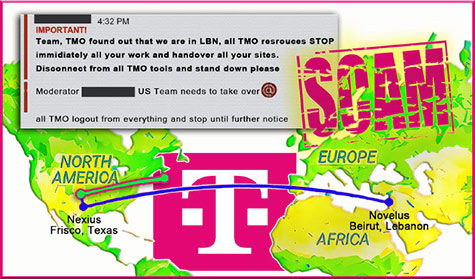
What the company was also doing, as the bankruptcy filings revealed, was accumulating obligations it could not meet. In the 90 days before the June 2, 2023, bankruptcy filings, the seven entities — including Myndco — made 44 payments totaling over $4.5 million to Novelus, a Beirut-based network help desk services company co-owned by Nexius Chairman Nabil Taleb. Those payments, made while American contractors and suppliers were being strung along with promises of payment they would never receive, represented precisely the kind of preferential transfers to insiders that bankruptcy trustees are empowered to claw back. Separately, three of the entities made 19 payments totaling $365,469 to Audela, a Montreal-based artificial intelligence company co-founded by Nabil Taleb’s brother. Nexius’s filings acknowledged it still owed Novelus $695,733 even after those transfers.
Meanwhile, the bankruptcy court’s notice to the over 1,000 creditors owed money told them plainly not to bother filing claims, because there was nothing to pay them with. Engineering companies, distributors, and contractors who had dedicated their businesses to serving Nexius — some owed hundreds of thousands of dollars accumulated over months of broken payment promises — were advised in effect that their legal claims were worthless.
In January 2023, MasTec Network Solutions acquired certain Nexius assets at a foreclosure sale conducted by the secured lender, PNC Bank, specifically declining to assume any of the enterprise’s liabilities. Contractors who were offered settlements initially received approximately 30 cents on the dollar, rising to roughly 50 cents when they pushed back. Many received nothing at all.
A Pattern the Family Now Inherits
The Maldonado-Andino family is now structurally in the same position as every other creditor the Nexius enterprise left behind — holding a legal judgment against companies that have nothing, dependent on insurance proceeds whose limits were set years ago against a different landscape of liability than the one a Delaware jury has now established.
The parallel is not coincidental. It is the product of the same corporate philosophy that allowed Nexius and Myndco to operate as though the rules that apply to other companies did not apply to them. The subcontracting agreement said Nexius had no responsibility for Velex’s safety practices, but Nexius actually oversaw Velex’s safety in practice. The training agreement said Myndco would certify workers before they entered the field, but Myndco released Jovan and Bryan Maldonado-Andino without completing their aerial lift training. The insurance requirements T-Mobile imposed established a $6 million combined floor for a general contractor managing construction operations at height—an amount calibrated to a risk environment that apparently did not fully account for the cost of two workers’ deaths resulting from that contractor’s failures.
The lesson for the wireless construction industry is worth stating plainly. Contract language that disclaims safety responsibility does not eliminate safety responsibility when your own conduct demonstrates that you maintained control. Insurance minimums imposed by carriers to protect themselves as additional insureds are not necessarily adequate to compensate the families of workers killed under those contracts. And a corporate structure that distributes liability across affiliated entities while concentrating financial benefits at the top can leave the workers at the bottom — and the families they leave behind — with nowhere to turn when something goes catastrophically wrong.
The Verdict, the Insurance, and What Comes Next
On April 24, 2026, a Delaware jury awarded $18,228,409 to the Maldonado-Andino family. Judge Jones entered judgment jointly and severally against Nexius Solutions and Myndco on April 27, 2026. The case docket reflects a status of JUDGMENT — JUDGMENT.
What it does not reflect is whether that judgment will ever be paid in full, partially, or at a fraction of its face value.
The documented facts are these. T-Mobile required Nexius to carry $1 million in commercial general liability coverage with a $2 million aggregate, backed by a $5 million umbrella — a combined contractual floor of $6 million. Nexius Solutions filed Chapter 7 bankruptcy on June 2, 2023, with no distributable assets. The bankruptcy case was closed on April 1, 2024. The bankruptcy court authorized the family to pursue recovery solely from available insurance proceeds. Myndco filed its own Chapter 7 bankruptcy on the same date, also with no distributable assets, and was not subject to the T-Mobile insurance requirements. Both companies’ insurers funded the defense of this litigation for years. Defense costs may have further eroded the available coverage pool.
Against an $18.2 million verdict, the maximum theoretical recovery from Nexius’s insurance — assuming full policy limits, no erosion from defense costs, no coverage disputes, and no lapses — is $6 million, leaving a gap of more than $12 million. Whether Myndco carried independent insurance above and beyond whatever Nexius maintained, and whether that coverage is available and unchallenged, is the central unanswered question in this case.
Jovan Maldonado-Andino was 23 years old when he died. Bryan Maldonado-Andino was 22. They had been on the job for less than two weeks. They climbed into a lift they were never certified to operate, on a day that Nexius’s own policies said was too dangerous to work, because every layer of oversight that was supposed to protect them had failed. A jury of their peers in Delaware said their lives and their families’ loss were worth $18.2 million.
Whether the companies responsible for their deaths will be made to pay anything close to that amount depends not on what happened at Bethany Beach, not on what twelve jurors decided after hearing the evidence, and not on what Judge Jones ordered. It depends on the coverage limits of insurance policies issued to companies that no longer exist — policies whose terms were set in a contractual framework that, on its face, appears insufficient for the risk they were meant to cover.
That is the final accounting of the Nexius enterprise’s relationship with the workers it employed, the contractors it shortchanged, and the families it left behind. A company that grew from $1 million to $1 billion in revenues, earned supplier-of-the-year recognition from a major carrier, and built a training academy to certify its workers, ultimately provided those workers with incomplete training, sent them into dangerous conditions without adequate supervision, transferred millions to its chairman’s overseas business interests in its final months, and left a $600 million hole in the industry it once dominated. At the bottom of that hole, still waiting to be made whole, are Vanessa Andino and Joaquin Maldonado.
