













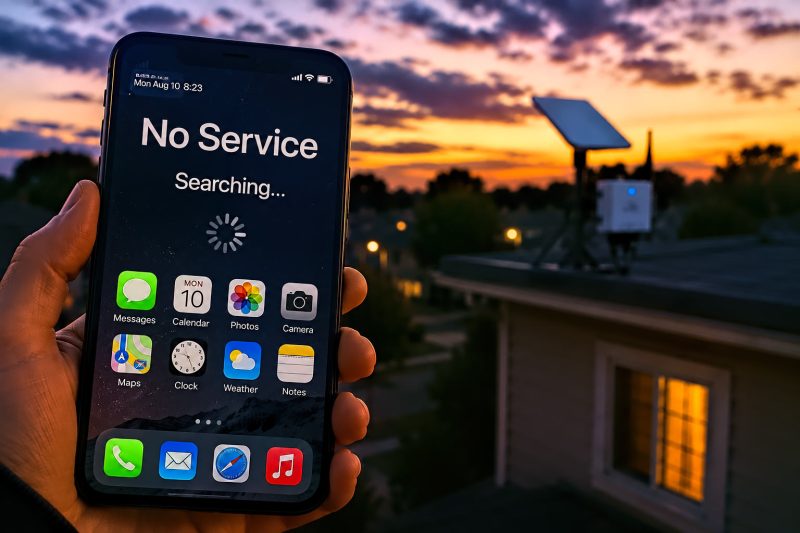
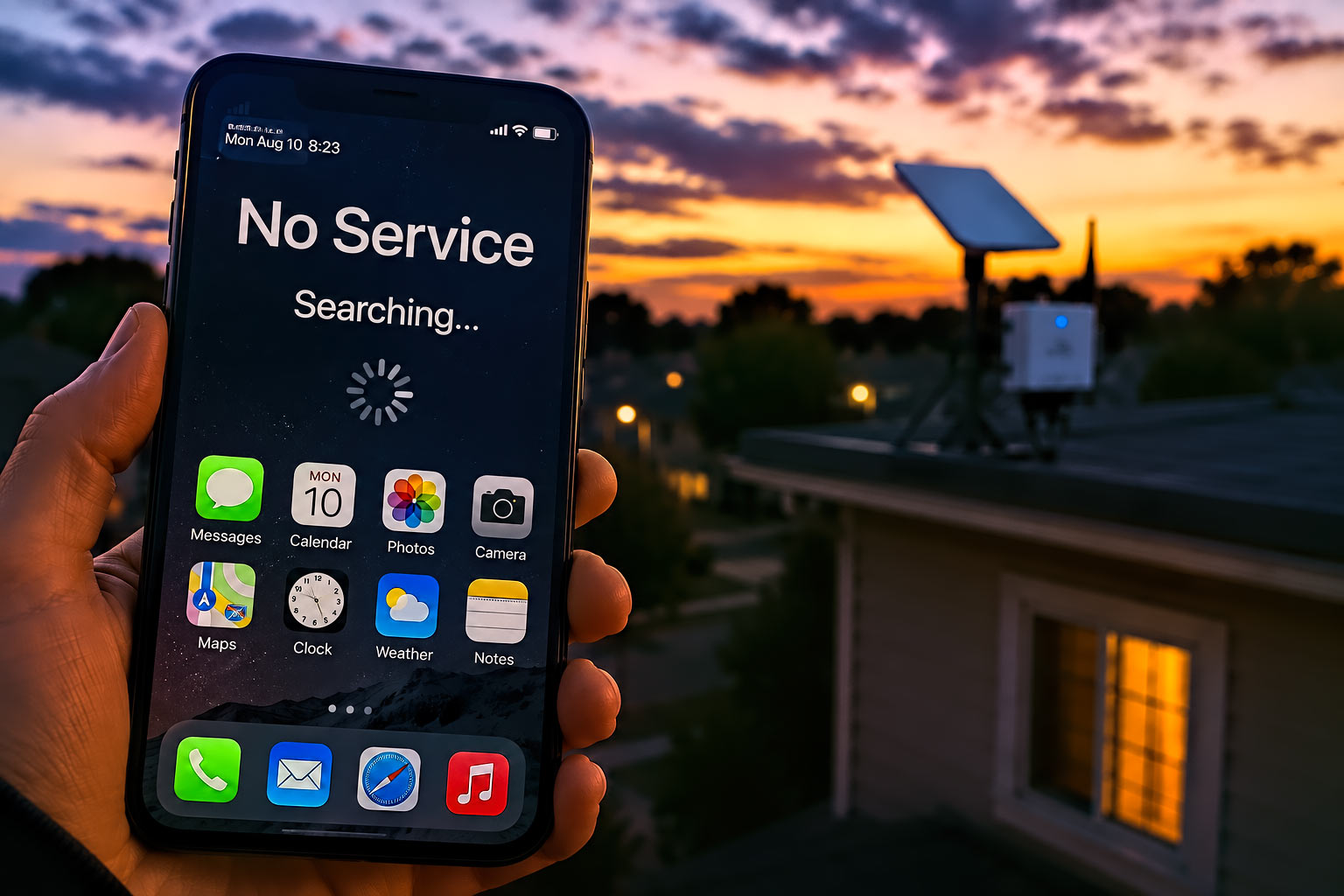
SpaceX’s plan to compete with AT&T, T-Mobile, and Verizon runs into a market reality that has nothing to do with satellites, spectrum, or rooftop small cells: people are holding onto their phones longer than they have in years, at the exact moment SpaceX needs them to buy new ones.
A network that requires new hardware, launching into a slumping upgrade market
The higher-bandwidth terrestrial service Elon Musk and Gwynne Shotwell described on last week’s earnings call runs on spectrum SpaceX acquired from EchoStar — frequencies no phone has ever needed to support before. Compatible modems, led by Qualcomm’s X105 5G Modem-RF, aren’t shipping until the second half of 2026, and phone manufacturers still need to build them into new devices before any subscriber’s existing phone becomes usable on the new network. Musk himself estimated at the All-In Summit in September 2025 that broad device availability was roughly two years out.
That timeline was always going to require patience. What makes it harder now is the state of the phone market SpaceX is launching into. Omdia reported global smartphone sales down 6% year over year in the second quarter of 2026, and Counterpoint separately clocked the market down 8% during a single week in mid-May (Week 20) — different measurements, but pointing the same direction. PYMNTS reported global sales hit their lowest second-quarter level in 13 years. The driver is largely a memory and component cost spike, with AI infrastructure demand pulling RAM and storage supply away from phone manufacturers, pushing device prices up and cooling replacement demand across most of the market.
The upgrade cycle keeps stretching, and manufacturers are leaning into it
This isn’t a one-quarter blip. Industry-wide upgrade cycles have stretched to 3-4 years, up from a much faster replacement pace in prior years. Part of that is cost-driven, but part of it is deliberate: Samsung and Google now match Apple’s roughly seven-year software support commitment on flagship devices, a shift that removes one of the main reasons consumers used to justify buying new hardware. Even the iPhone — traditionally a faster-cycling device than Android — now sits at an implied U.S. replacement cycle of roughly 2.8 years, according to Axis Intelligence Research’s analysis of retirement-age data published by Consumer Intelligence Research Partners (CIRP).
Put simply: SpaceX needs a large number of people to buy new phones sooner than the market is currently behaving, in order to access a network that, per Musk’s own admission, won’t even have compatible hardware widely available until sometime in 2027 at the earliest.
The carrier playbook SpaceX may have to borrow
There’s a well-worn solution to this exact problem, and the Big Three have used it for every major network transition they’ve pushed: subsidize the hardware. AT&T, T-Mobile, and Verizon didn’t wait for organic upgrade cycles to drive 5G adoption — they paid for it, through trade-in credits and device payments spread over 24 to 36 months, effectively covering some or all of the cost of a new phone to get customers onto the network the carrier wanted them on, on the carrier’s timeline rather than the customer’s.
If SpaceX wants meaningful terrestrial-network adoption before people would naturally replace their phones anyway, it’s difficult to see an alternative to doing the same thing. That has a direct cost implication worth sitting with: Shotwell framed the rooftop small-cell buildout as unusually “capex efficient” on the earnings call, and relative to macro tower construction, it likely is. But a network is worthless without subscribers who can actually use it, and if reaching those subscribers requires eating hardware costs against a market where people are actively extending how long they keep a phone, the efficiency argument holds on the infrastructure side while taking on a new and significant expense on the customer-acquisition side — one that isn’t part of the capex figure SpaceX has been touting.
What this means for the “fourth network” timeline
None of this changes what SpaceX is building. It changes when it can plausibly matter. A rooftop small-cell network with no phones able to use its full capability is a network without a customer base, and the customer base SpaceX needs is currently choosing, in aggregate, to keep the phone it already has. Between the two-year chipset timeline Musk himself has acknowledged and a phone market moving in the opposite direction of what that timeline requires, SpaceX’s terrestrial ambitions look gated less by satellites or spectrum than by a smartphone replacement cycle SpaceX has no ability to control — and, if it wants to shorten it, no obvious way to do so without spending money in a place it hasn’t yet said it’s willing to spend.
