














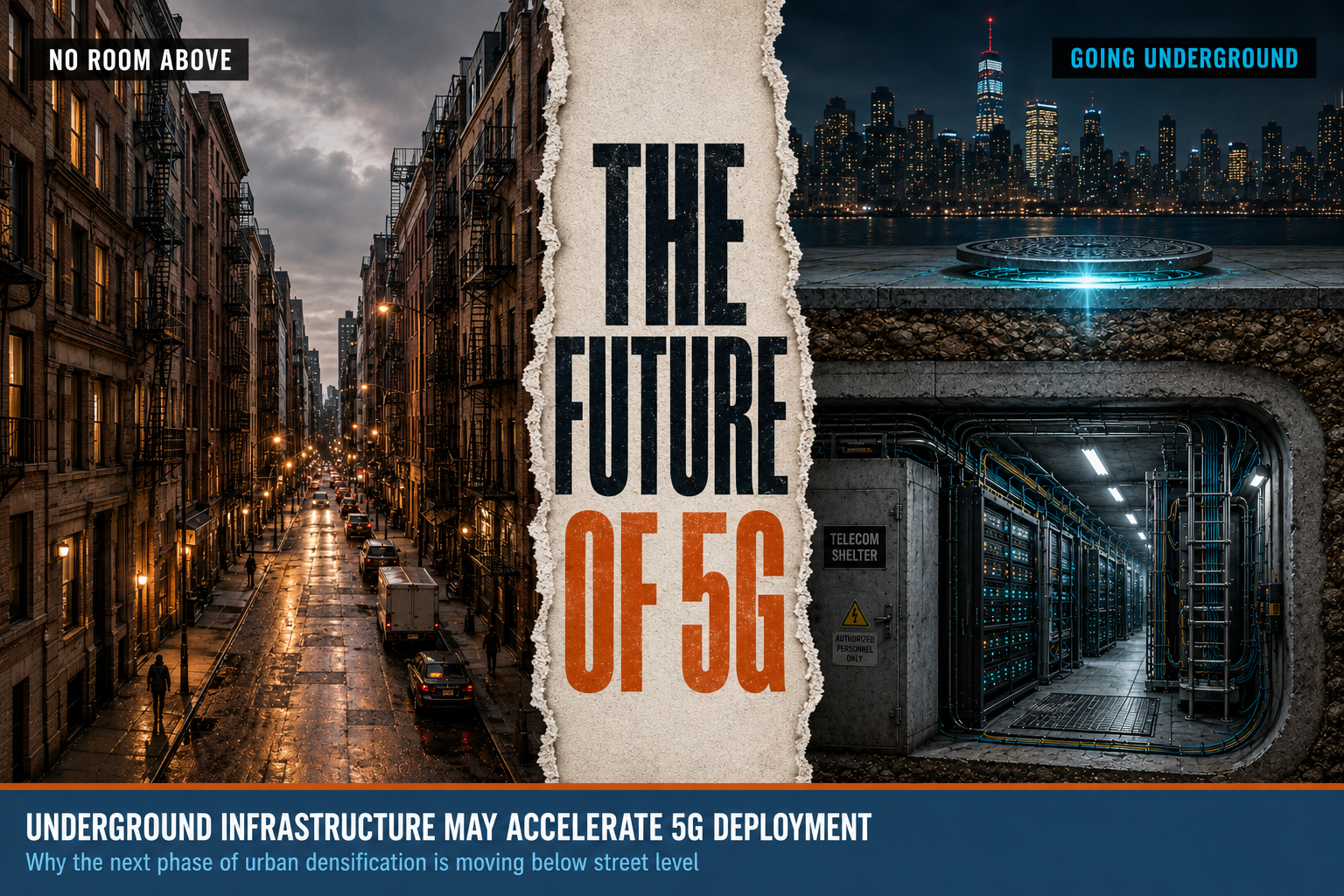
GOING UNDERGROUND as carriers run out of room above, subsurface telecommunications shelters are emerging as a practical complement to traditional above-ground radio base stations in the dense urban environments driving the next phase of 5G densification.
By Contributor Writer: Victor Costa Medeiros
The expansion of 5G networks is often discussed in terms of spectrum, speed, and performance. But one of the most critical challenges remains largely unresolved: how to deploy infrastructure efficiently in dense urban environments.
Cities represent the highest concentration of connectivity demand. At the same time, they present the most complex deployment barriers. Zoning restrictions, aesthetic regulations, limited physical space, and community resistance continue to delay or prevent the installation of traditional above-ground radio base stations (RBS).
This is not a theoretical issue. It reflects a structural limitation observed across large-scale deployments, and it is becoming increasingly relevant as the United States accelerates network densification.
When traditional infrastructure reaches its limits
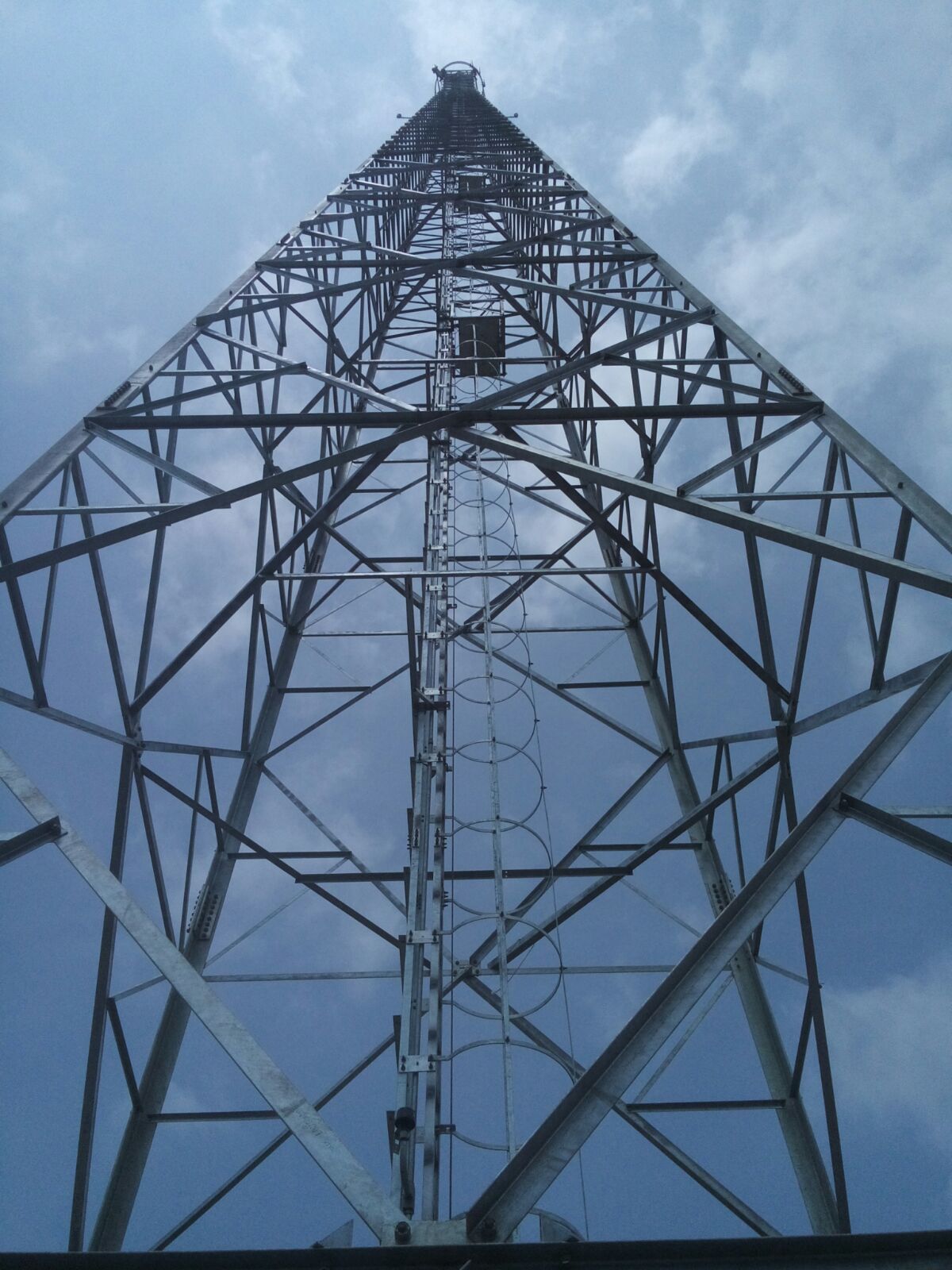
Traditional above-ground deployments work well in open environments but quickly run into zoning, aesthetic, and space constraints in dense urban cores.
In open and rural environments, conventional towers and above-ground structures remain effective. In dense urban areas, however, their limitations become clear.
Municipal regulations frequently restrict visual impact, particularly in historic districts and high-value urban zones. At the same time, available space is limited, requiring complex negotiations or structural adaptations.
Even when technically feasible, public opposition can significantly delay deployment timelines. As a result, the areas with the highest demand for connectivity are often the most difficult to serve, creating a persistent infrastructure bottleneck.
A shift toward subsurface solutions
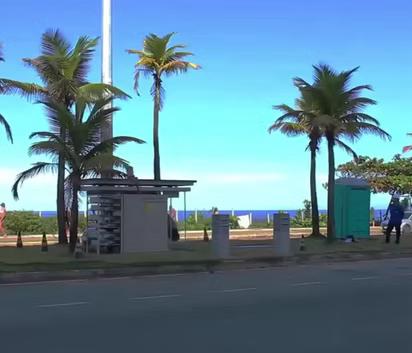
By relocating equipment below ground and leaving only low-profile elements at the surface, subsurface shelters dramatically reduce visual impact in historic and high-value urban zones.
In response to these constraints, alternative infrastructure models have gained attention. One approach that has demonstrated consistent results in large-scale deployments is the use of underground telecommunications shelters.
By relocating critical equipment below ground level and maintaining only low-profile elements at the surface, this model significantly reduces visual impact, minimizes regulatory friction, and expands the number of viable deployment locations.
Rather than replacing traditional infrastructure, subsurface deployment represents a complementary strategy aligned with the realities of modern urban environments.
Evidence from large-scale deployments
Field experience across large-scale infrastructure programs indicates that underground solutions can evolve from niche applications into scalable deployment strategies. Reported results include:
- Operational reliability approaching 99.9% uptime
- Reduction of approximately 30% in municipal licensing timelines
- Significant efficiency gains, including multi-million-dollar CAPEX savings
- Increased success rates in previously unfeasible locations
Engineering requirements for scalability
For underground infrastructure to be viable at scale, several technical considerations must be addressed. Structural integrity and proper sealing are essential to prevent environmental exposure. Thermal management systems ensure stable operating conditions. Security mechanisms and remote monitoring capabilities are critical for maintaining continuous performance.
Equally important is standardization. Replicable engineering models improve efficiency, reduce costs, and enable large-scale deployment.
Why this matters for the United States
The United States is entering a critical phase of infrastructure expansion, driven by initiatives such as the BEAD Program and the growing need for network densification.
As investment increases, so does deployment complexity — particularly in dense urban areas. Regulatory friction, permitting delays, and community resistance are already emerging as key constraints.
In this context, underground infrastructure offers a practical and scalable alternative for overcoming these barriers, particularly in locations where traditional approaches face recurring limitations.
Key takeaways for industry stakeholders
- Early regulatory engagement is essential to reduce delays
- Standardized engineering approaches enable scalability and cost efficiency
- Remote monitoring systems are critical for operational reliability
- Subsurface solutions should be evaluated early in the planning process
Looking ahead
As network density requirements continue to increase, expanding the range of viable infrastructure solutions will be essential. Underground telecommunications shelters represent a practical approach to addressing one of the most persistent challenges in modern network deployment.
The future of network deployment will depend on integrating multiple approaches aligned with increasingly complex urban environments.
About the author
Victor Costa Medeiros is a telecommunications infrastructure specialist with more than 17 years of experience in site acquisition, regulatory licensing, and large-scale network deployment. He has led and contributed to the implementation of more than 1,500 radio base stations across Brazil, supporting nationwide infrastructure expansion initiatives, including projects aligned with the Meta ANATEL program.


